
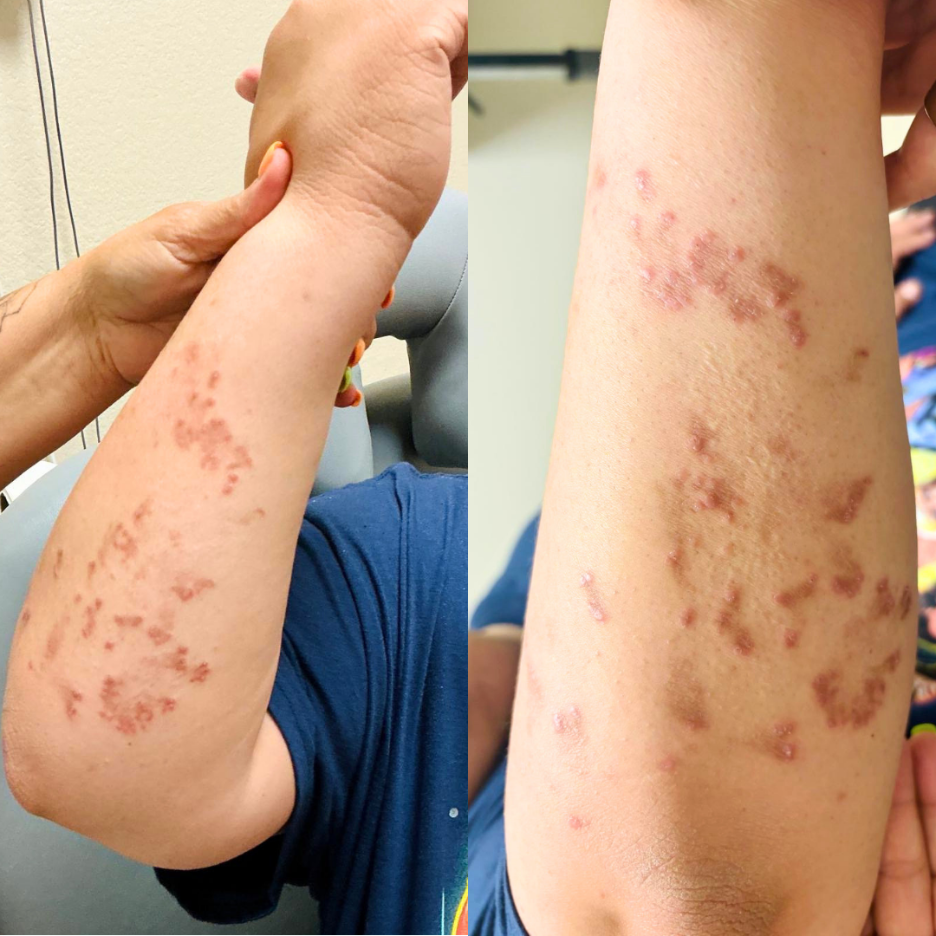
A male in his late 20s presented to our dermatology clinic for evaluation of a persistent rash on forearms present for several years. They had slowly enlarged over time and did not have symptoms including pain or itch.
On examination, we observed multiple firm reddish-brown firm papules arranged in a snake-like pattern, a classic presentation of elastosis perforans serpiginosa (EPS), a rare perforating skin disorder.
Elastosis perforans serpiginosa (EPS) is an uncommon skin disorder in which abnormal elastic fibers are eliminated through the outer layer of the skin, a process known as transepidermal elimination. The condition most commonly affects children, adolescents, and young adults and typically appears on the neck, arms, face, or other flexural areas.
EPS may occur without an identifiable cause but can also be associated with inherited connective tissue disorders such as Ehlers-Danlos syndrome, Marfan syndrome, osteogenesis imperfecta, pseudoxanthoma elasticum, and Down syndrome. It has also been reported as a side effect of D-penicillamine therapy.
In our patient’s case, the characteristic appearance and chronic history raised strong suspicion for elastosis perforans serpiginosa. After discussing the diagnosis and available treatment options, an individualized management plan was developed based on the extent of disease and the patient’s goals.
This case highlights the importance of evaluation by a board-certified dermatologist when a skin eruption persists for years without a clear diagnosis. Rare skin conditions such as elastosis perforans serpiginosa can often be recognized through careful clinical examination, allowing patients to receive an accurate diagnosis, appropriate counseling, and personalized treatment recommendations.
Disclaimer: This is a real patient case shared with written patient consent for educational purposes. All patient images and stories are the property of Dermatology Solutions and may not be reproduced or distributed without permission.