

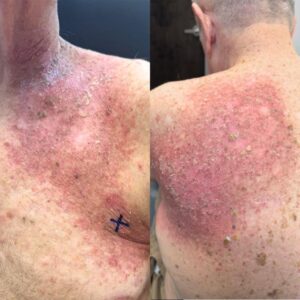
A male in his mid-seventies undergoing treatment for metastatic squamous cell carcinoma presented with progressive redness, irritation, and skin breakdown over the left chest extending to the upper back. These areas corresponded precisely to prior radiation treatment fields. He reported burning discomfort, increased sensitivity, and worsening dryness over several weeks. There were no systemic symptoms such as fever or chills.
This presentation is a classic example of radiation dermatitis, which is often mistaken for infection, allergic reaction, or cancer progression.
What Is Radiation Dermatitis?
Radiation dermatitis is a localized inflammatory skin reaction that occurs as a result of exposure to ionizing radiation during cancer therapy. It most commonly affects areas that are directly within the radiation field, such as the chest wall or back in patients treated for metastatic or locally advanced skin cancers.
The severity of radiation dermatitis can range from mild redness to severe ulceration depending on the total radiation dose, individual skin sensitivity, and concurrent treatments.
Etiology
Radiation dermatitis develops because ionizing radiation damages rapidly dividing basal keratinocytes, which impairs the skin barrier. Radiation also causes injury to dermal blood vessels and connective tissue, leading to inflammation and delayed healing.
Several factors increase the risk of developing more severe reactions. These include a higher cumulative radiation dose, larger treatment fields such as the chest and back, advanced age with thinner skin, concurrent chemotherapy or immunotherapy, and poor nutritional status.
Symptoms
Patients typically experience symptoms that evolve over time.
In the early stages, patients notice redness that resembles a sunburn, along with dryness, scaling, and mild itching or tightness.
As the condition progresses, patients may develop pain, a burning sensation, swelling, and increased warmth. The skin may begin to peel, which can be either dry or moist.
In more severe cases, the skin can break down, leading to ulceration, crusting, and oozing. These changes increase the risk of secondary infection.
The distribution of these symptoms is usually sharply defined and corresponds exactly to the radiation treatment field, which helps distinguish radiation dermatitis from other conditions.
Radiation Recall
Radiation recall is a delayed inflammatory reaction that occurs in previously irradiated skin after exposure to certain medications. This reaction can develop weeks to months after radiation therapy has been completed.
Common triggers include chemotherapy agents such as taxanes and anthracyclines, as well as certain targeted therapies and antibiotics.
Patients with radiation recall may develop sudden redness, blistering, or peeling in areas that had previously healed from radiation. This reaction is often confused with infection or recurrence of cancer, which can lead to unnecessary interventions if not recognized.
Treatment Options
The management of radiation dermatitis depends on the severity of the skin reaction.
In mild cases, treatment focuses on gentle skin care. Patients are advised to use fragrance free moisturizers, avoid irritants, and apply low potency topical corticosteroids to reduce inflammation.
In moderate cases, stronger topical corticosteroids may be required. Barrier repair creams containing ceramides can help restore the skin, and topical antibiotics may be used if there is concern for secondary infection.
In severe cases, more intensive care is necessary. This may include wound care with non-adherent dressings, oral antibiotics if infection is confirmed, and pain management. In selected cases, temporary interruption of radiation or systemic therapy may be considered.
Supportive measures are also important. Cool compresses can help relieve discomfort, strict sun protection is essential, and proper nutrition supports skin healing.
When to Worry?
Patients should seek prompt medical attention if they experience rapidly worsening pain, signs of skin necrosis, fever, or spreading redness that may indicate infection. Non-healing ulcers should raise concern for persistent or recurrent tumor. A new reaction that occurs after starting a medication should prompt evaluation for radiation recall.
Clinical Pearls
Radiation dermatitis is typically confined to the radiation field, which helps differentiate it from generalized drug eruptions. Older patients are at higher risk due to decreased skin resilience. Moist desquamation significantly increases the risk of infection and requires close monitoring. Radiation recall can occur long after therapy is completed and should always be considered in oncology patients with new localized skin changes.