

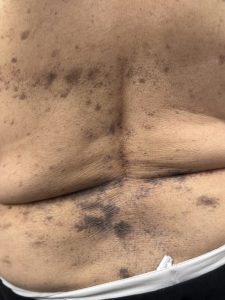
If you’re experiencing stubborn dark patches or grayish discoloration on your face, neck, or folds of your skin, Lichen Planus Pigmentosa (LPP) may be the reason. This rare, autoimmune, and often underdiagnosed skin condition can mimic other forms of hyperpigmentation, but is unique in the type of inflammation between the two layers of skin.
Lichen Planus Pigmentosa is a chronic skin condition that causes flat, dark brown to gray-black patches, especially in sun-exposed areas like the face and neck, or areas of friction such as underarms, waist, and inner thighs like in our patient pictured here. Unlike traditional lichen planus, LPP doesn’t usually cause bumps or intense itching—instead, it presents primarily as skin discoloration.
• Face (especially around the temples and forehead)
• Neck
• Upper chest
• Underarms
• Inner arms and thighs
LPP is more common in individuals with medium to dark skin tones (Fitzpatrick skin types IV-VI). It most often affects young to middle-aged adults, and the exact cause is still unknown, though several factors may play a role.
• Sun exposure and heat
• Hair dyes (especially those containing PPD)
• Fragranced skincare or cosmetic products
• Excessive friction or rubbing
• Certain medications or underlying autoimmune conditions
A board-certified dermatologist can often recognize LPP during a physical exam, but in some cases, a skin biopsy may be needed to confirm the diagnosis. It’s important to rule out similar skin conditions like:
• Erythema dyschromicum perstans (ashy dermatosis)
• Post-inflammatory hyperpigmentation
• Fixed drug eruptions
• Melasma
There’s no single cure for LPP, but a combination of anti-inflammatory treatments and pigment-lightening strategies can help improve the appearance of affected skin over time.
• Low- to mid-potency topical steroids (short-term use)
• Calcineurin inhibitors (like tacrolimus or pimecrolimus)
• Skin-brightening agents: azelaic acid, kojic acid, niacinamide, or licorice root extract
• Topical tranexamic acid (off-label use)
• Oral tranexamic acid (off-label, for patients with widespread pigmentation)
• Short courses of low-dose oral steroids (for active inflammation)
• Oral antioxidants and vitamin D support
• Superficial chemical peels (with caution in darker skin types)
• Laser treatments (e.g., fractional lasers or Q-switched lasers—must be performed by experienced providers)
• Microneedling with brightening serums
To prevent further pigmentation and irritation:
• Use broad-spectrum mineral sunscreen with zinc oxide or titanium dioxide daily
• Avoid harsh exfoliants, perfumed products, and hot environments
• Stick to gentle, fragrance-free skincare routines
• Avoid hair dyes or facial products containing PPD or cinnamic aldehydes
LPP can sometimes be mistaken for melasma, but the two have key differences. LPP tends to appear as more slate-gray to brown pigmentation and often involves the temples, ears, or neck in a reticulated (net-like) pattern. Melasma, on the other hand, typically presents as more uniform brown patches on cheeks, forehead and upper lips and is strongly associated with hormonal changes, such as during pregnancy or from birth control pills.
Lichen Planus Pigmentosa is a complex and often frustrating condition, especially when it affects visible areas. While there is no cure, with time, patience and expert diagnosis and a tailored treatment plan, it’s possible to calm the inflammation, prevent further discoloration, and gradually improve skin tone.
If you’re dealing with stubborn discoloration and not getting answers, book a consultation with our dermatology team today. We’ll help you uncover the cause—and build a plan that works for your skin.
Disclaimer: The photos shown are actual images of our patient, shared with explicit written consent. These images are for educational use only and may not be copied, distributed, or reproduced without permission from our office.