
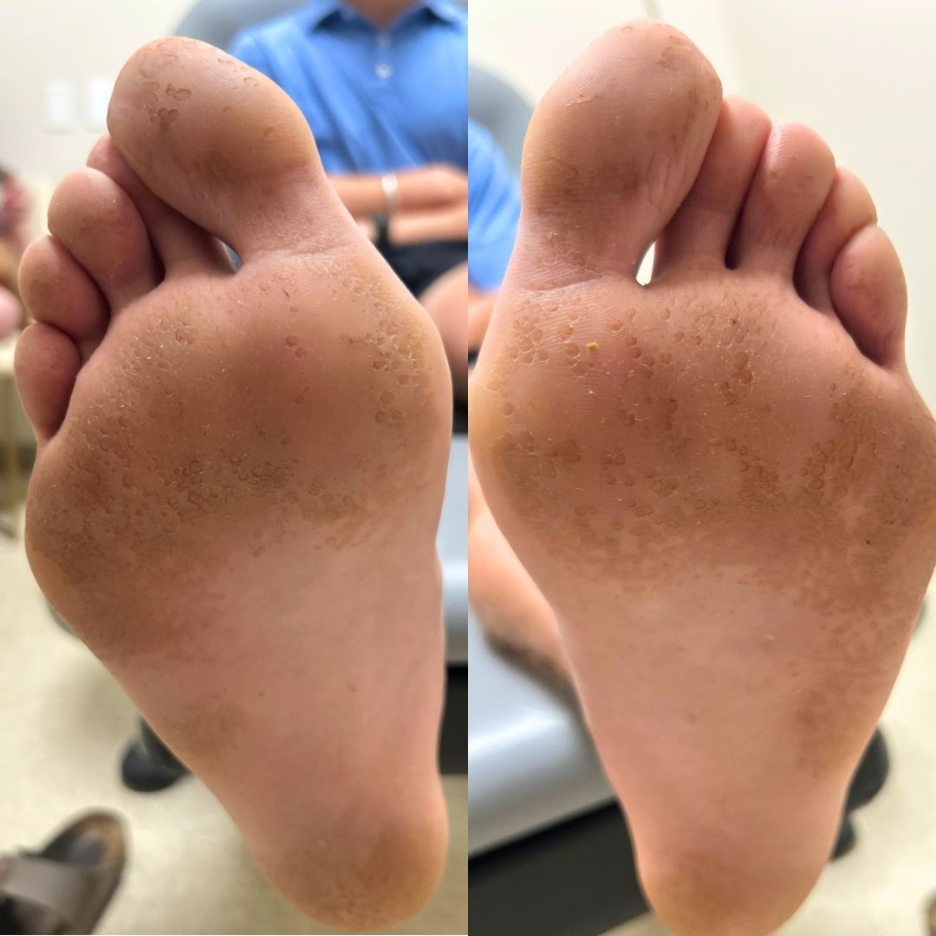
One of our recent patients was a healthy teenage athlete who came to our dermatology clinic with a complaint many people find embarrassing but rarely seek medical attention for—persistent foot odor. Despite good hygiene practices, frequent sock changes, and over-the-counter powders, the odor persisted. On examination, we noticed numerous tiny crater-like depressions on the weight-bearing areas of the soles, leading to a diagnosis of pitted keratolysis.
Pitted keratolysis is a common but often underrecognized bacterial skin infection that affects the soles of the feet. It is frequently seen in athletes, military personnel, healthcare workers, and others who spend long hours in occlusive footwear. While many patients assume they simply have sweaty feet, the condition is actually caused by bacteria that thrive in warm, moist environments.
Pitted keratolysis is a superficial bacterial infection of the outer layer of the skin, most commonly caused by Corynebacterium species, Kytococcus sedentarius, or Dermatophilus congolensis. These bacteria produce enzymes that break down keratin, creating the characteristic small pits or craters seen on the soles. The condition is often associated with excessive sweating of the feet (hyperhidrosis), prolonged use of closed shoes, and humid environments.
In our patient’s case, treatment included a topical antibiotic along with measures to reduce foot moisture. We discussed the importance of breathable footwear, moisture-wicking socks, and management of excessive sweating. Most patients experience significant improvement within a few weeks of treatment.
This case serves as an important reminder that persistent foot odor is not always a hygiene issue. Evaluation by a dermatologist can identify underlying conditions such as pitted keratolysis and provide effective treatment that improves both symptoms and quality of life.
Disclaimer: These are real patient cases shared for educational purposes with express written consent. All patient images and stories are the property of Dermatology Solutions and may not be reproduced or distributed without permission.